Westchester County Dog Registration Information
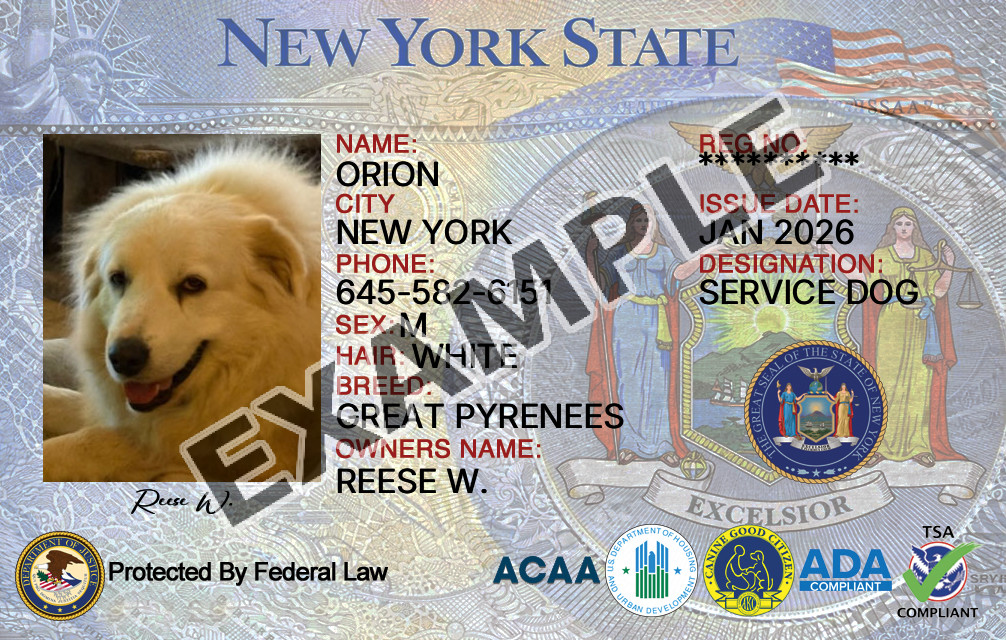
Service Dogs and Emotional Support Animals in Westchester, New York
Where Do I Register My Dog in Westchester County, New York for My Service Dog or Emotional Support Dog?
In Westchester County, New York, “registering” a dog typically means getting a municipal dog license through the city, town, or village where your dog lives. Service dogs and emotional support animals (ESAs) do not get “registered” through one universal federal registry, but your municipality may still require a dog license in Westchester County, New York like it does for other dogs—often tied to proof of rabies vaccination and local fee rules.
Where to Register or License Your Dog in Westchester County, New York
SPCA Westchester, Inc.
- Open seven days a week: 12:00 PM – 4:00 PM
- Thursdays & Fridays: 12:00 PM – 6:00 PM
Overview of Dog Licensing in Westchester County, New York
If you’re searching for where to register a dog in Westchester County, New York, the process is usually straightforward: you apply for a dog license with the municipality where your dog lives. New York State guidance for municipalities explains that owners apply for a license through the local licensing agent in the municipality where the dog is harbored, and you should contact your municipal clerk for the documentation needed.
In practice, that means residents of Westchester County often work with their local:
- Town clerk (for many towns)
- City clerk (for cities)
- Village clerk (if you live in an incorporated village)
- Local dog control officer or local animal control contact may be involved for enforcement questions, but the license is typically issued through the clerk/licensing agent
Local rules can differ inside the county. For example, fees may change by municipality, and licensing periods may be annual or multi-year depending on the local program. Many areas also require that the dog wear the license tag when off the owner’s premises (unless a local exception applies).
What You Need Before Registering a Dog
Most municipalities in Westchester County will ask for certain documents before issuing or renewing a dog license. The exact list can vary by city/town/village, but these are common licensing items across New York:
Common documents and details
- Proof of current rabies vaccination (often a rabies certificate from your veterinarian)
- Owner identification (driver’s license or another ID, depending on local policy)
- Proof of residency (some municipalities may request this, especially for new licenses)
- Spay/neuter proof (if your municipality charges different fees for altered vs. unaltered dogs)
- Payment method accepted by the municipal office (varies by office)
Steps to Register or License a Dog in Westchester County, New York
The steps below describe a typical process for a dog license in Westchester County, New York. Because Westchester is made up of many municipalities, your clerk’s office may provide an application form online, in person, or by mail, and may have local variations.
-
Identify your licensing municipality.
Use your home address to determine whether you’re in a city, town, and/or incorporated village (some residents live in both a town and village with separate offices). The licensing office is typically the clerk or designated licensing agent for where your dog is harbored.
-
Gather required documents.
Start with rabies vaccination proof, your ID, and spay/neuter documentation if applicable.
-
Apply for the license (new license or renewal).
Many municipalities issue a license number and tag. Keep copies of your paperwork for your records.
-
Pay the fee (if any) and confirm term dates.
Fees are set locally and often differ for spayed/neutered vs. unspayed/unneutered dogs. Some municipalities may exempt certain working dogs (including service dogs) from the fee while still issuing the license.
-
Attach the tag to your dog’s collar and keep the license current.
The tag is typically meant to be worn as identification, especially when your dog is off your property.
If you’re licensing a service dog or ESA
- Still start with your local municipal dog license (unless your municipality has a specific exemption). Licensing and disability-related status are separate concepts.
- Don’t assume there is a “service dog registry” you must use. In the U.S., service-dog access rights flow from disability law and training/behavior in public, not from a single federal registration database.
- ESAs are different: emotional support animals are generally tied to housing-related documentation, not public-access rights, and “registration” sites are not the legal basis for ESA status.
Service Dog Laws in Westchester County, New York
A service dog is not the same thing as a municipal dog license. A dog license is a local identification and vaccination/fee program. A service dog’s legal status is about disability access rights and whether the dog is trained to perform tasks for a person with a disability.
How service dogs typically interact with local dog licensing
- Licensing may still be required. Even if a dog is a service dog, many municipalities still require a local license for identification and rabies compliance.
- Fee exemptions may exist locally. New York State guidance indicates municipalities may exempt license fees for certain working dogs, including service dogs, but that does not necessarily mean “no license required”—it may mean “no fee charged.”
- No universal federal registry. In general, there is no single federal “registration” you must complete to have a legitimate service dog.
- “How do I obtain/renew the dog license for my address?”
- “Does our municipality waive license fees for service dogs, and what documentation do you require for the waiver (if any)?”
Emotional Support Animal Rules in Westchester County, New York
An emotional support animal (ESA) is an animal that provides comfort or support that helps with a mental or emotional disability, typically in the context of housing accommodations. ESAs are different from service dogs because ESAs generally do not have the same public-access rights as service dogs.
How ESAs relate to dog licensing requirements
- Licensing is still a local issue. If your municipality requires licensing for dogs, an ESA dog usually still needs a municipal dog license like other dogs.
- “ESA registration” is not a universal government process. There is not one official national ESA registry that replaces local licensing or legally establishes ESA status by itself.
- Housing documentation is separate. ESA-related paperwork is typically handled between a resident and a housing provider under applicable housing rules, and does not replace municipal requirements like rabies vaccination documentation and dog licensing.
Dog License vs. Service Dog vs. Emotional Support Animal (ESA)
People often use the word “register” to mean different things. The table below clarifies the differences between a standard municipal dog license, service dog status, and emotional support animal status—especially helpful if you’re trying to understand dog licensing requirements Westchester County, New York while also navigating service dog or ESA needs.
| Category | Dog License (Municipal) | Service Dog | Emotional Support Animal (ESA) |
|---|---|---|---|
| What it is | Local license issued by your city/town/village for identification and compliance purposes. | A dog trained to do specific tasks for a person with a disability (disability access concept). | An animal that provides emotional support related to a disability, primarily in a housing context. |
| Where you “register” | Your municipal licensing agent (often your local clerk) in Westchester County, NY. | Not through one universal federal registry. Status is based on disability law and training/behavior. | Not through one universal government registry. Typically documented for housing accommodations. |
| Typical documents | Rabies vaccination proof; spay/neuter proof if applicable; owner info; payment if required. | Varies by situation; may involve confirming trained tasks and appropriate public behavior; not a license document by itself. | Often involves housing-related documentation supporting the need for an ESA accommodation; does not replace rabies/licensing needs. |
| Fees | Set by your municipality; may vary based on spay/neuter status. | Some municipalities may waive license fees for service dogs but still issue a license/tag. | ESA status does not automatically waive municipal dog license fees; local rules apply. |
| Public access | Not applicable (it’s a local license, not an access credential). | Generally recognized for public access under applicable laws when the dog is trained and under control. | Generally does not grant the same public-access rights as a service dog. |
Frequently Asked Questions
Is there one official “service dog registry” for Westchester County, New York?
No. Service dog status is not established by joining a single universal federal registry. In Westchester County, the practical “registration” most people need to complete is the municipal dog license for where the dog lives, while service dog status is tied to disability law and task training rather than a county registration database.
Do I still need a dog license in Westchester County, New York if my dog is a service dog?
Often, yes. Many municipalities require a license for dogs kept in the municipality, even if fees may be waived for certain working dogs. The safest approach is to contact your local clerk/licensing agent and ask whether a license is required and whether the fee is waived for service dogs.
Do I need a separate “ESA registration” to license my dog?
Typically, no. Municipal dog licensing is usually based on items like rabies vaccination proof and local fee rules. ESA-related documentation is generally handled for housing accommodations and does not replace municipal licensing requirements.
What if I live in a village inside a town in Westchester County?
That’s common in Westchester. Licensing responsibility can depend on the municipality that issues dog licenses for where the dog is harbored. If you’re unsure which office is correct, contact your village clerk and town clerk and ask which one is the licensing agent for your address.
Who can help if I can’t figure out the right local licensing office?
Start with your municipal clerk (city/town/village). If you need help identifying the right local contact for animal services questions, the countywide SPCA contact listed above can be a practical starting point for guidance on who serves your area.
What’s the fastest way to get the correct answer for my exact address?
Have your address and rabies vaccination information ready and call your local city/town/village clerk to ask about licensing steps and required documents. If you don’t know which clerk applies, ask the SPCA Westchester contact above which municipal office issues dog licenses for your municipality.
What You May Need
Local wording to use when calling
If you’re calling a clerk’s office, these phrases can help you get to the right person quickly:
- “I need a dog license in Westchester County, New York—which office issues licenses for my address?”
- “What are the dog licensing requirements Westchester County, New York for rabies proof and renewals in this municipality?”
- “Is there a fee waiver for a service dog, and what documentation do you require for the waiver?”
- “Do you license dogs through the town, the village, or both?”
Register A Dog In Other New York Counties
Select your county below to get started with your dog’s ID card. Requirements and license designs may vary by county, so choose your location to see the correct options and complete your pup’s registration.
- Albany Dog License Cards
- Allegany Dog License Cards
- Bronx County Dog License Cards
- Broome Dog License Cards
- Cattaraugus Dog License Cards
- Cayuga Dog License Cards
- Chautauqua Dog License Cards
- Chemung Dog License Cards
- Chenago Dog License Cards
- Clinton Dog License Cards
- Columbia Dog License Cards
- consolidated borough-county government Dog License Cards
- Cortland Dog License Cards
- Delaware Dog License Cards
- Dutchess Dog License Cards
- Erie Dog License Cards
- Essex Dog License Cards
- Franklin Dog License Cards
- Fulton Dog License Cards
- Genesee Dog License Cards
- Greene Dog License Cards
- Hamilton Dog License Cards
- Herkimer Dog License Cards
- Jefferson Dog License Cards
- Kings County Dog License Cards
- Lewis Dog License Cards
- Livingston Dog License Cards
- Madison Dog License Cards
- Monroe Dog License Cards
- Montgomery Dog License Cards
- Nassau Dog License Cards
- New York County Dog License Cards
- Niagara Dog License Cards
- Oneida Dog License Cards
- Onondaga Dog License Cards
- Ontario Dog License Cards
- Orange Dog License Cards
- Orleans Dog License Cards
- Oswego Dog License Cards
- Otsego Dog License Cards
- Putnam Dog License Cards
- Queens County Dog License Cards
- Rensselaer Dog License Cards
- Richmond Dog License Cards
- Rockland Dog License Cards
- Saratoga Dog License Cards
- Schenectady Dog License Cards
- Schoharie Dog License Cards
- Schuyler Dog License Cards
- Seneca Dog License Cards
- St. Lawrence Dog License Cards
- Steuben Dog License Cards
- Suffolk Dog License Cards
- Sullivan Dog License Cards
- Tioga Dog License Cards
- Tompkins Dog License Cards
- Ulster Dog License Cards
- Warren Dog License Cards
- Washington Dog License Cards
- Wayne Dog License Cards
- Wyoming Dog License Cards
- Yates Dog License Cards
